TL;DR
Personal injury firms gaining competitive advantage in 2026 are consolidating around four technologies: embedded AI built into the case management system, agentic AI that acts on cases without being prompted, decision-driving analytics, and enterprise-grade cybersecurity. The single biggest shift is embedded versus standalone AI. Embedded AI reads the full case file, including intake notes, medical records, communications, and timelines at the same time. Standalone AI reads only what you upload to it. Assembly Neos by is the personal injury case management platform that puts embedded intelligence inside the system firms already use, built on 40+ years of expertise across 1,100 firms and 15,000 users. Firms using this approach recover 15 to 20 hours per case and handle 30% more volume with the same team.
Why Is 2026 the Year Personal Injury Firms Move Past Standard Legal Tech?
2026 is the year the gap between firms using embedded AI and firms still running standalone tools becomes visible in settlement outcomes, caseload capacity, and client experience. Standard legal technology (email, digital document storage, basic case management) is no longer enough to stay competitive. The winning firms in 2026 are the ones making deliberate technology choices, not the ones adopting the most tools.
The four trends below describe what leading personal injury firms are actually doing. The connective thread across all four is context: software that understands the full case performs work that standalone software cannot.
Legal Tech Trend #1: Agentic AI Over Generative AI for Case Work
What Is the Difference Between Generative AI and Agentic AI in Personal Injury Work?
Generative AI responds when a user prompts it. Agentic AI operates autonomously, taking defined actions on cases without waiting for step-by-step instructions. Generative requires a human to start each task. Agentic runs tasks on its own when case data changes. For personal injury firms, that distinction is the difference between saving minutes per task and recovering hours per case.
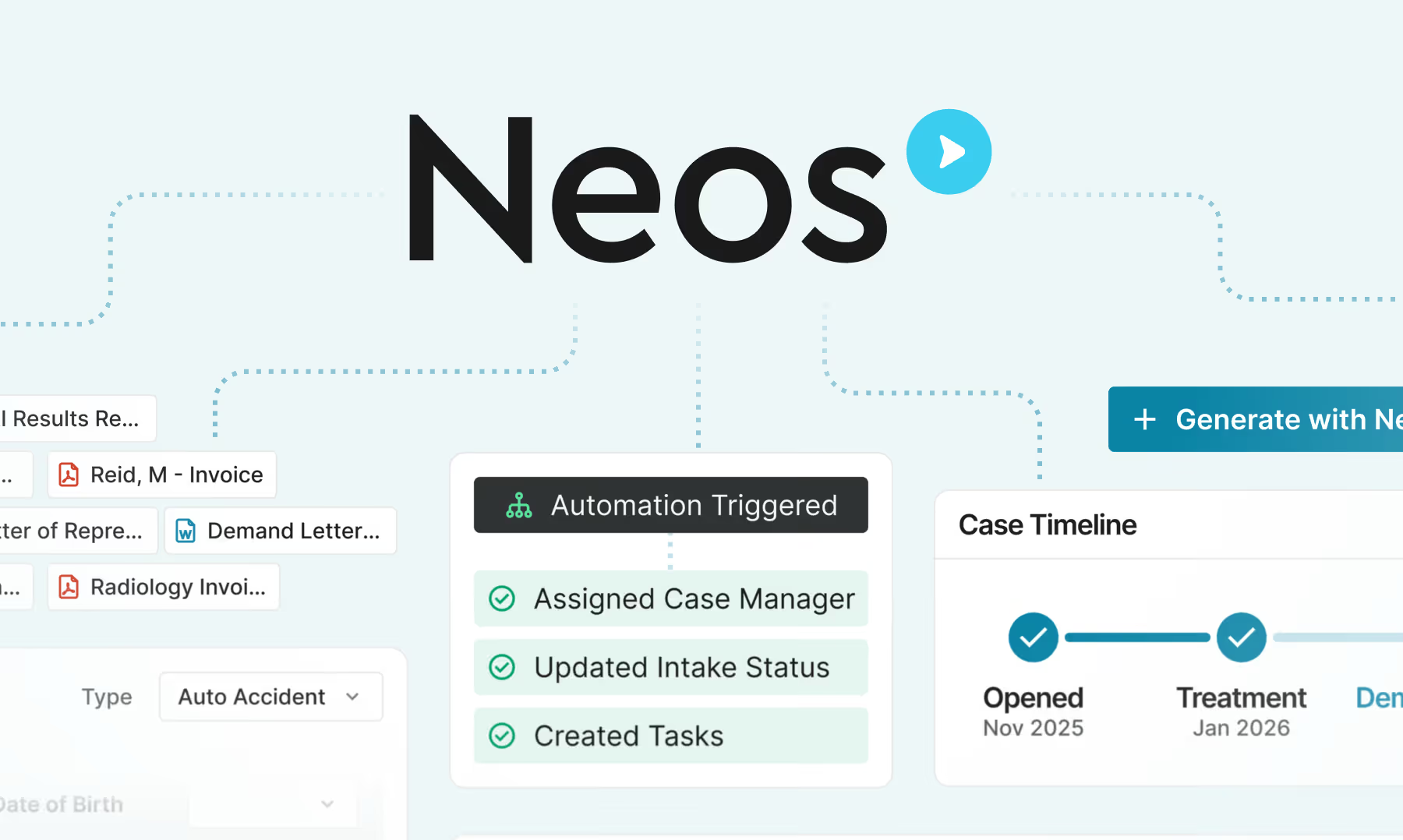
NeosAI has both agentic and generative capabilities. For example, it can generate documents and summaries from case data as part of its generative capabilities. Additionally, when medical records enter Neos, its agentic AI function automatically converts PDFs to searchable text, extracts diagnoses using standardized codes (ICD-10, CPT), and populates case forms with structured data. Tasks that took paralegals several hours are now automatically completed in minutes.
Where Do Personal Injury Firms Use Agentic AI in 2026?
Leading personal injury firms are applying agentic AI across four core workflows: medical record processing, automated case file population, treatment gap analysis, and client communication automation. Time savings compound across every case. Firms report recovering 15 to 20 hours per case with their existing team, which converts directly into more settlements without added headcount.
Legal Tech Trend #2: Embedded AI Over Standalone AI Tools
What Is Embedded AI in Personal Injury Case Management?
Embedded AI is intelligence built directly into a case management platform, where it reads every document, intake note, communication, and timeline in the case at the same time. It is not a separate tool connected through an integration. It lives inside the system where firms already run their cases, which means every action it takes is informed by the full case context.
What Is Standalone AI and Why Does It Fall Short for Personal Injury Firms?
Standalone AI is a separate tool that analyzes only the documents uploaded to it. It cannot see the rest of the case file. The workflow for standalone AI requires exporting files from case management, uploading them to the separate platform, reading the output, then manually transferring insights back. Context can be lost during the every handoff process.
What Can Embedded AI Do That Standalone AI Cannot?
Embedded agentic AI takes action inside the workflow instead of surfacing information and waiting for a human to act. A treatment gap produces a task. A statute of limitations deadline produces a high-priority calendar alert. A new provider produces a records request. The firm does not have to notice the signal and translate it into a next step. That is what makes the embedded agentic model the current standard for personal injury firms operating at scale. Taking action, not just producing information, is the difference between AI that reports and AI that runs the work.
Legal Tech Trend #3: Reports That Drive Decisions, Not Just Describe the Past
Why Do Case Management Reports Go Unused at Personal Injury Firms?
Most case management reports go unused because they are descriptive, not prescriptive. They show what happened (total cases, revenue by month, cases by stage) without telling the firm what to do differently. Decision-driving analytics, by contrast, connect inputs to outcomes and surface the specific change that will improve performance. Neos advanced analytics is built around this model.
How Do Personal Injury Firms Track Marketing ROI Without Guessing?
Personal injury firms can track marketing ROI by connecting referral source to actual case revenue, not just case count. Many firms spend $50,000 to $200,000 per year on marketing with minimal visibility into what actually drives settled cases. A case management platform with advanced reporting capabilities connects marketing spend to case revenue at the source level, which surfaces the channels producing profitable cases and the channels producing volume without profit.
What Other Analytics Protect Profitability at a Personal Injury Firm?
Two reports matter most after referral ROI: case type profitability and workload distribution. Case type profitability shows which case types deliver the highest profit per attorney hour and highest close rate. A firm might find that dog bite cases deliver the second-highest profit per hour, yet the firm is not actively targeting them. Workload distribution compares active cases per attorney and tasks completed per week across time periods, which makes it possible to redistribute work before burnout causes attrition.
Legal Tech Trend #4: Enterprise Cybersecurity as a Baseline, Not an Upgrade
Why Are Personal Injury Firms a High-Value Target for Cyberattacks in 2026?
Personal injury firms hold medical records, Social Security numbers, financial information, settlement funds, and privileged communications, which makes them a high-value target for attackers. In 2025, cybercrime attacks against legal services increased by nearly 400% over the prior year, driven largely by AI-powered attack methods. Attacks now include phishing emails that mimic opposing counsel's writing style, deepfake audio calls impersonating clients to request wire transfers, and automated vulnerability scanning that finds security gaps in minutes.
The vulnerability is usually not the firm's internal IT. It is the software vendors the firm trusts with case data. If a case management system is compromised, every client record inside it is exposed at the same time.
What Security Controls Should Personal Injury Firms Require from Every Legal Software Vendor?
Personal injury firms should require the following controls before signing with any legal software vendor. These are not optional in 2026:
- SOC 2 Type II certification. An independent auditor has verified the vendor's security controls. Ask to see the report, not just a logo.End-to-end encryption. Client data should be encrypted in transit (TLS 1.2 or higher) and at rest (AES-256 is the current standard, used by financial institutions and government agencies).
- Multi-factor authentication (MFA). Mandatory for all users, not optional. Adaptive MFA that triggers additional verification on new devices or unusual locations is stronger.Role-based access controls (RBAC). Permissions granular to matter, client, or document type so a billing clerk cannot access privileged attorney-client communications.
- Comprehensive audit logging. Every access leaves a searchable record: who, what, when, where. Essential for e-discovery and for catching internal bad actors.Regular penetration testing. Vendors should commission third-party tests continuously and share summary reports with customers. Bug bounty programs are a positive signal.
- Data residency controls. Geographic storage controls for firms with international clients, GDPR exposure, or regulated-industry work.Automated backup and disaster recovery. Encrypted backups stored separately from production, with documented Recovery Time Objective and Recovery Point Objective figures.
Neos security meets each of these requirements. Ask any vendor for the same.
Teeing up a Successful 2026
The firms winning in 2026 are not the ones using the most legal technology. They are the ones using the right legal technology the right way, with embedded intelligence at the center rather than a stack of bolted-on tools. Schedule a Neos consultation to see how embedded intelligence changes day-to-day case work for personal injury firms.
FAQ: 2026 Legal Tech Trends
What is embedded AI in case management software?
Embedded AI is artificial intelligence built directly into a case management platform, where it reads the full case file (medical records, intake notes, communications, and timelines) in the same system the firm uses to run the case. It is not a separate tool or integration. Neos embedded intelligence works this way.
What is the difference between embedded AI and standalone AI for personal injury firms?
Embedded AI lives inside the case management system and has access to the full case file at all times. Standalone AI tools analyze only the specific documents a user uploads to them and cannot see the rest of the case. Embedded AI catches cross-document issues such as symptoms mentioned in intake that never made it into treatment. Standalone AI cannot catch those issues because it never sees the other documents.
What is the practical difference between generative AI and agentic AI for personal injury work?
Generative AI responds when prompted: a user uploads a document, asks a question, and receives an answer. Agentic AI acts autonomously: it converts incoming medical records to searchable text, extracts details, and populates case forms without the user having to initiate each step. Agentic AI is where the real time savings happen.
What security certifications should a personal injury firm require from a legal software vendor?
At minimum, a personal injury firm should require SOC 2 Type II certification (with a reviewable report, not just a logo), AES-256 encryption, TLS 1.2 or higher encryption in transit, mandatory multi-factor authentication, role-based access controls, comprehensive audit logging, and documented disaster recovery procedures. Vendors who give vague answers or promise certifications "coming soon" are cutting corners and should be disqualified.
Can smaller personal injury firms (3 to 5 attorneys) benefit from embedded AI?
Yes, often more than larger firms. Smaller teams adopt new workflows faster and see proportionally larger efficiency gains. A firm handling 150 cases with 3 attorneys and 2 paralegals can typically handle 200+ with embedded AI and the same team, because the intelligence operates on every case in parallel rather than replacing specific roles.